
Apple MacBook Air M4 for Students: 2026 Review and Buying Guide
Fact-checked: | Audience: Students worldwide | Review type: Research-based buying guide
Quiet, light and fast enough for years of ordinary study—but only a smart 2026 purchase when its exact configuration is clearly cheaper than the current M5 MacBook Air.
Students usually want long battery life, low weight, silent operation and dependable performance. The M4 MacBook Air delivers all four. The harder question in 2026 is whether a clearance or refurbished M4 beats Apple’s newer M5 Air after memory, storage, warranty and course software are matched.
Quick verdict: is the MacBook Air M4 good for students?
Buy it for
- Essays, research, Office, Google Workspace and online classes
- Humanities, business, education and general science
- Web, Python, Java, Swift and moderate development
- Photo, music and light-to-moderate 4K video work
- Silent libraries and long mobile study days
Do not buy it for
- Required Windows-only or x86-only course applications
- NVIDIA CUDA, serious ML training or large local models
- SOLIDWORKS/Revit-led courses without an approved alternative
- High-end gaming, advanced 3D rendering or certified workstation work
- Students who need upgradeable RAM or internal storage
Best size: 13-inch for frequent travel; 15-inch for split-screen research, code and spreadsheets. Best mainstream configuration: 16GB/512GB. Battery verdict: excellent, though mixed study is shorter than Apple’s controlled video maximum. Biggest advantage: strong performance in a silent 1.24kg package. Biggest weakness: platform compatibility comes before hardware quality.
Worth buying in 2026? Yes, when a warranty-backed M4 with the memory and storage you need is meaningfully cheaper than an equivalent M5. At near-M5 pricing, buy the M5.
Is the MacBook Air M4 still current in 2026?
No. Apple announced the M4 Air on March 5, 2025, with availability beginning March 12. The M5 Air was announced March 3, 2026 and reached stores March 11. Apple’s main store now configures M5, not M4.
M4 stock survives as retailer clearance, third-party refurbished, Apple Certified Refurbished and used inventory. That is not a defect; it changes the value test: current M4 price → M5 difference → memory/storage → warranty → workload → expected support.
MacBook Air M4 vs current M5 MacBook Air
Like-for-like 2026 comparison; specifications vary by size and configuration Scroll sideways to compare all columns →
| Area | MacBook Air M4 | Current MacBook Air M5 | Student consequence |
|---|---|---|---|
| Generation | 2025; previous generation | 2026; current generation | M5 gets the longer remaining platform runway |
| CPU / GPU | 10-core CPU; 8- or 10-core GPU | 10-core CPU; 8- or 10-core GPU with Neural Accelerators | M4 already feels fast; M5 helps heavier graphics and AI tasks |
| Neural / memory | 16-core Neural Engine; 120GB/s | 16-core Neural Engine; 153GB/s | M5 has 27.5% more bandwidth; both support Apple Intelligence |
| Memory / SSD | 16/24/32GB; 256GB–2TB | 16/24/32GB; 512GB–4TB | The M5 base includes 512GB; compare equal capacities |
| Wireless | Wi-Fi 6E; Bluetooth 5.3 | Wi-Fi 7; Bluetooth 6; Thread | M4 remains adequate; M5 is better for newer networks |
| Display / camera | 500-nit P3 IPS, 60Hz; 12MP Center Stage | Essentially the same | No display reason alone to upgrade |
| External displays | Built-in plus two displays, each up to 6K/60Hz | Two up to 6K/60Hz or 4K/144Hz; one up to 8K/60Hz, 5K/120Hz or 4K/240Hz | Both support a strong three-screen study setup |
| Battery / chassis / ports | 53.8/66.5Wh; MagSafe, 2× TB4, audio | Same capacities, official runtime and core chassis | M4 sacrifices little in everyday portability |
| Power adapter | 30W or 35W dual-port by configuration; 70W fast charge | 40W Dynamic/60W max in many bundles; 70W+ fast charge | In-box adapter and even inclusion vary by market |
| Current US direct price | Not sold configurable-new by Apple | 13-inch 16/512: US$1,299 retail; US$1,199 education | M4 needs a genuine clearance/refurb discount |
The M5 launched at US$1,099 retail/US$999 education, but Apple’s US store displayed US$1,299/US$1,199 during this August check. That is why a dated launch comparison cannot substitute for today’s checkout price.
MacBook Air M4 specifications
Primary reviewed configuration: 13-inch, 10-core CPU (four performance and six efficiency cores), 10-core GPU, 16GB unified memory, 512GB SSD, 13.6-inch display, 53.8Wh battery and 35W dual USB-C adapter. It currently runs macOS Tahoe 26. Best Buy listed this configuration at US$1,139.99 clearance but sold out on August 13, 2026—useful evidence that a listing can have a “current price” without being buyable.
Verified from Apple’s 13-inch and 15-inch M4 technical specifications Scroll sideways to compare all columns →
| Specification | Verified M4 detail | Why it matters for students |
|---|---|---|
| Chip | 10-core CPU; 8/10-core GPU; hardware ray tracing; 16-core Neural Engine; 120GB/s | Fast everyday work and useful creative acceleration |
| Media engine | H.264, HEVC, ProRes/RAW decode and encode; AV1 decode | Efficient playback and exports in supported editors |
| Memory / storage | 16/24/32GB unified; 256GB, 512GB, 1TB or 2TB SSD | Neither is user-upgradeable; buy enough initially |
| Display | 13.6-inch 2560×1664 or 15.3-inch 2880×1864; 224ppi; 500 nits; P3; True Tone; 60Hz | Sharp, colorful workspace; no high refresh or OLED blacks |
| Camera / audio | 12MP Center Stage, Desk View, 1080p; three-mic array; four or six speakers | Strong classes, interviews and presentations |
| Input | Backlit Magic Keyboard, Touch ID, Force Touch trackpad | Comfortable long-form navigation without a mouse |
| Ports | MagSafe 3; 2× Thunderbolt 4/USB4 40Gb/s; 3.5mm audio | A hub is needed for USB-A, HDMI, SD or Ethernet |
| Wireless / displays | Wi-Fi 6E; Bluetooth 5.3; built-in panel plus two 6K/60Hz externals | Modern networking and a proper multi-monitor desk |
| Battery / charging | 53.8Wh or 66.5Wh; up to 18h video/15h web; 70W fast-charge support | Excellent mobility; adapter varies by model/bundle |
| Warranty / OS | One-year limited warranty when new/Apple-refurbished; macOS Tahoe 26 supported | Third-party refurbished warranty may differ |
13-inch vs 15-inch MacBook Air M4
MacBook Air M4 size comparison for students Scroll sideways to compare all columns →
| Area | 13-inch M4 | 15-inch M4 | Student verdict |
|---|---|---|---|
| Display | 13.6in, 2560×1664 | 15.3in, 2880×1864 | 15 gives more physical workspace; density/quality match |
| Size / weight | 304.1×215×11.3mm; 1.24kg / 2.7lb | 340.4×237.6×11.5mm; 1.51kg / 3.3lb | 13 wins for backpacks, travel and small desks |
| Battery | 53.8Wh | 66.5Wh | Apple rates both alike; larger screen consumes more |
| Speakers | Four-speaker system | Six speakers with force-cancelling woofers | 15 sounds fuller for media and editing |
| GPU / charger | 8- or 10-core GPU; 30W or 35W adapter | 10-core GPU; 35W adapter | Check the retail bundle; both fast-charge with 70W |
| US launch price | US$999; US$899 education | US$1,199; US$1,099 education | Current clearance prices should be lower, not merely labeled “sale” |
| Best user | Frequent campus movement | Split-screen research, spreadsheets, code, creative work | Choose workspace only if it justifies 270g extra |
The larger display is worth paying for when it replaces an external monitor or reduces constant window switching. Otherwise, the 13-inch is the better default student size. The 15-inch is not faster merely because it is larger.
Design, display, keyboard, webcam and ports
The rigid aluminum chassis, thin profile and stable hinge suit repeated movement between home, library and class. Dark Midnight finishes show fingerprints more readily. The fanless design is completely silent—valuable in libraries, recordings and music sessions—but silence does not mean unlimited sustained performance.
The Liquid Retina IPS panel is sharp, bright enough for most indoor study, P3-capable and color-consistent. RTINGS’ 13-inch laboratory review likewise found a sharp, bright, color-accurate display but low contrast. Its glossy surface reflects windows, blacks look gray beside OLED, and 60Hz is less fluid than 90/120Hz premium Windows panels. Sixty hertz is sufficient for essays and spreadsheets; students prioritizing deep blacks or HDR should compare the ASUS Zenbook 14 OLED student review. LCD also avoids permanent-image-retention concerns from prolonged static OLED interfaces.
The backlit Magic Keyboard is well spaced for essays and code, though travel is fairly shallow. Touch ID speeds logins and purchases. Apple’s large Force Touch trackpad remains a practical advantage when a student does not carry a mouse. The 12MP Center Stage camera keeps the speaker framed, Desk View can show a workspace, and 1080p output is a major improvement over older Air cameras. The 15-inch’s six-speaker array is stronger; both sizes have useful microphones.
Ports are the persistent compromise. MagSafe charging leaves both Thunderbolt 4 ports free and its breakaway connector is reassuring around crowded desks. Thunderbolt/USB4 handles docks, 40Gb/s external SSDs and displays, but the computer lacks native USB-A, HDMI, SD card and Ethernet. Many students need one reputable hub; photographers may prefer an SD reader, and dorm Ethernet needs an adapter.
Unlike M1/M2-era summaries that circulate online, M4 supports the built-in display and two external 6K/60Hz displays simultaneously. That is an excellent research or coding setup. Use a dock that explicitly supports the desired display arrangement; one physical Thunderbolt port may need to carry two displays.
M4 performance: fast bursts, fanless limits
For browser tabs, Word, Excel, PowerPoint, PDFs, Zoom, Teams, Spotify and cloud syncing, the M4 has ample reserve. Much cheaper laptops also perform these basics well; the premium buys quieter operation, battery, build, display/input quality and performance headroom—not exclusive access to schoolwork.
The CPU compiles code and processes data quickly, the GPU accelerates Metal-aware creative tools, the Neural Engine handles supported machine-learning operations, and the media engine makes supported H.264, HEVC and ProRes work unusually efficient. FrediTech’s detailed MacBook Air M4 review similarly emphasizes smooth productivity, coding and light creative work while identifying gaming, ports, 60Hz and sustained fanless loads as the boundaries. Apple’s specifications and independent tests support that overall framing.
In Tom’s Hardware’s 15-inch 10-core-GPU, 16GB/512GB test unit running macOS Sequoia 15.3, a ten-run Cinebench 2024 sequence fell from 844 points initially into the mid-600s. During that gauntlet it measured 102.2°F (39°C) between G/H and 107.9°F (42.2°C) at the hottest underside point. Notebookcheck measured its 15-inch SoC falling from roughly 29W to 9W under combined load. Brief tasks stay fast; active cooling matters for hours of rendering, 3D or large builds.
Battery life: official claim vs real work
Apple claims up to 18 hours of streamed video and 15 hours of wireless web use. Those are controlled maxima, not a mixed-class guarantee. The same Tom’s Hardware 15-inch unit lasted 15 hours 14 minutes in a 150-nit mixed web/video/light-graphics test. LaptopMedia’s 13-inch test reached 16 hours 18 minutes of local video at 180 nits in Low Power Mode, while TechRadar’s web test recorded 14 hours 51 minutes; its reviewer’s heavier mixed use was closer to eight hours. Different methods should not be averaged.
Charging works through MagSafe or either USB-C port. Included adapters depend on size, GPU configuration, retailer bundle and country. A supported 70W USB-C Power Delivery adapter enables fast charging; a smaller shared adapter is lighter but slower. Verify what is in the box.
What is unified memory—and how much should a student buy?
Apple’s unified memory is one fast pool shared by CPU, GPU and Neural Engine. Sharing can reduce data copying and improve efficiency, but it does not make 16GB infinite or equivalent to every larger PC configuration. Unified memory cannot be upgraded after purchase.
Memory and storage recommendations by student workload Scroll sideways to compare all columns →
| Student type | Memory | Storage | Reason |
|---|---|---|---|
| General, humanities, business, education | 16GB | 512GB preferred | Comfortable Office, research, calls and multitasking |
| Computer science / IT | 16GB; 24GB for Docker/VMs | 512GB–1TB | Images, SDKs and Xcode consume space |
| Photo, music, moderate video | 16–24GB | 512GB–1TB | Caches, libraries and source media grow quickly |
| Data / local AI experimentation | 24GB | 1TB if datasets local | Shared memory helps model capacity, not CUDA compatibility |
| Heavy professional creative work | 32GB | 1TB+ | At this price also compare an actively cooled Pro |
16GB is enough for most coursework, coding and moderate creative use. 24GB is the meaningful upgrade for containers, virtualization, large projects, heavier creative multitasking and modest local AI. 32GB is justified only by a known workload; it can push an older Air into current Pro pricing.
256GB works for disciplined cloud-first use, but macOS, Apple Intelligence resources, Adobe apps, Xcode, photos and offline coursework compete for it. 512GB is the best balance. 1TB+ suits local video, RAW photos, development toolchains and datasets. iCloud, OneDrive, Google Drive and an external SSD help, but syncing and local caches still need free internal space. The internal SSD is soldered/service-integrated rather than a conventional user-upgradeable drive.
macOS and student software compatibility
macOS offers stability, a Unix terminal, FileVault, strong accessibility and excellent integration with iPhone through AirDrop, Handoff, Universal Clipboard, hotspot and iPhone Mirroring where supported. Android users can use a Mac normally, but lose several ecosystem conveniences. Word, Excel, PowerPoint, Outlook, OneNote and Teams run natively on Apple silicon; Google Workspace and Classroom run in modern browsers. Microsoft 365 is not automatically included.
Native Apple-silicon or Universal apps are the safest choice. Rosetta 2 currently translates Intel Mac apps, but it does not solve Windows software, old drivers or every plug-in. Apple says full Rosetta support remains through macOS 27, with macOS 28 retaining a narrower subset for certain older games. That makes developer support worth checking now.
Windows cannot be installed through Boot Camp on Apple silicon. Parallels can virtualize Windows 11 on Arm, and Windows can translate many x86/x64 apps, but drivers, nested virtualization, anti-cheat, 3D APIs and specialist applications may fail. Budget for the virtualization app and Windows license. Never buy first and hope a required course package works later.
Student software and workload compatibility in August 2026 Scroll sideways to compare all columns →
| Software / workload | macOS fit | Memory | Important limitation |
|---|---|---|---|
| Word, Excel, PowerPoint, Google Workspace | Excellent | 16GB | Verify specialist Excel add-ins, macros and course templates |
| Zoom, Teams, Meet | Excellent | 16GB | Calls use more battery than document work |
| VS Code, Python, Java, JavaScript, Git | Excellent | 16GB | Check native packages and course architecture |
| Swift / Xcode | Excellent; Mac required | 16–24GB | SDKs/simulators need substantial storage |
| Docker / Windows VM | Good, conditional | 24GB preferred | Arm images and virtualization constraints |
| MATLAB, R, Jupyter | Good | 16–24GB | MATLAB macOS GPU acceleration is unavailable |
| AutoCAD for Mac | Good for supported Mac workflow | 16–24GB | Windows toolsets/course plug-ins may differ |
| SOLIDWORKS desktop / Revit 2026 | Poor | — | No native macOS desktop version; Revit requires Windows |
| Photoshop / Lightroom | Excellent | 16–24GB | RAW catalogs and scratch files need storage |
| Final Cut, Premiere, Resolve | Strong | 24GB for heavier 4K | Sustained effects/rendering favor active cooling |
| GarageBand / Logic Pro | Excellent | 16–24GB | Confirm third-party plug-ins; silence is valuable |
| Blender / professional 3D | Moderate | 24–32GB | Fanless GPU is not a workstation replacement |
| Local AI / ML training | Light experimentation | 24–32GB | Metal/MPS is not NVIDIA CUDA; use cloud/cluster for serious training |
| Gaming | Limited | 16GB | Native library and anti-cheat matter more than peak GPU score |
Suitability by academic major
MacBook Air M4 suitability by academic major Scroll sideways to compare all columns →
| Major | Suitability | Suggested configuration | Main concern |
|---|---|---|---|
| Humanities, social sciences, education | Excellent | 13in, 16/512 | Price versus a cheaper laptop |
| Business, accounting, finance | Strong, conditional | 13/15in, 16/512 | Excel add-ins and specialist accounting apps |
| Biology, chemistry, general science | Strong | 16/512 | Instrument or lab software may be Windows-only |
| Computer science / IT | Strong | 16–24GB, 512GB+ | x86 labs, VMs, CUDA and architecture assumptions |
| Data science | Good for moderate local work | 24GB, 512GB–1TB | Serious models need cloud, cluster or NVIDIA |
| Engineering | Mixed | 24GB/512GB if approved | CAD, Revit, SOLIDWORKS and certified GPU requirements |
| Architecture | Often weak | Confirm every required app first | Revit/Windows/CAD ecosystem compatibility |
| Design, photography, media | Strong | 15in, 24GB, 1TB | Sustained 3D/video work and storage cost |
| Music production | Excellent | 16–24GB, 512GB+ | Plug-in compatibility and library size |
Students in scientific courses can also compare these verified science apps for students. Software compatibility is more important than brand preference.
Apple Intelligence, local AI and academic integrity
M4 is eligible for Apple Intelligence on supported macOS versions. Current tools include Writing Tools, summaries, notification prioritization, image features, Siri improvements, Shortcuts intelligence and optional ChatGPT integration where available. Apple lists a 7GB on-device storage requirement and requires supported device/Siri languages; availability still varies by language, region and feature, with mainland-China restrictions applying in specified cases.
These tools can reorganize notes, summarize your own material or help draft an outline. They can also hallucinate, flatten nuance and produce inaccurate citations. Follow course rules, verify output against primary sources and never submit generated prose dishonestly. A Neural Engine and Apple Intelligence badge do not make the Air ideal for large local models or serious ML training. More unified memory helps a model fit; it does not add NVIDIA CUDA or sustained workstation cooling.
Current pricing, education discounts and refurbished M4s
Prices below were checked August 13, 2026 and are snapshots, not conversions or permanent offers. Tax treatment, keyboard, charger, trade-in, warranty and eligibility vary. Apple no longer offers direct-new M4 education configurations; compare M4 retailers with the local M5 education basket.
Selected M4 market evidence and current M5 education references Scroll sideways to compare all columns →
| Market / condition | Configuration | Price checked | Buying interpretation |
|---|---|---|---|
| US / Best Buy refurbished | 13in M4, 16/256 | US$999 | Weak beside M5 education 16/512 unless price falls |
| US / Apple Certified Refurbished | 15in M4, 16GB/1TB | US$1,439 | Good warranty; compare exact M5 15in/1TB price |
| UK / new retailer listing | 13in M4, 16/512 | about £1,099.97 | Only ~£99 below M5 education; M5 may be better |
| US / Apple education | 13in M5, 16/512 | US$1,199 | Current same-storage benchmark |
| UK / Apple education | 13in M5, 16/512 | £1,199 | Check any current gift-card promotion |
| Canada / Apple education | 13in M5, 16/512 | C$1,659 | Includes education savings |
| Australia / Apple education | 13in M5, 16/512 | A$1,939 | Compare local M4 stock and charger bundle |
| Germany / Apple education | 13in M5, 16/512 | €1,289 | Verify keyboard and eligibility |
Education eligibility and promotions differ globally; higher-education students, parents buying for them, and faculty/staff may qualify under market-specific terms, while secondary-school eligibility is not universal. Apple’s US store offered a US$100 gift card with eligible Air purchases from July 16 through September 24, 2026. Other markets use separate dates and benefits. Use the final checkout total, not a headline percentage.
New discounted, Apple refurbished or used?
New clearance offers a fresh battery and standard retailer/Apple warranty terms. Apple Certified Refurbished units are tested, include a one-year Apple warranty, are AppleCare-eligible and can save up to 15%, but inventory changes. Third-party refurbished or used can cost less, yet grading, battery and warranty quality vary.
Before paying, confirm Activation Lock/Find My is removed, no organization MDM or Remote Management remains, and About This Mac shows M4 plus the advertised memory/storage. Inspect the display, ports and liquid indicators; check Battery Health and cycle count; verify charger, keyboard layout, return period and serial-number coverage. Apple says Mac batteries are designed to retain up to 80% of original capacity at their maximum cycle count; use the displayed Normal or Service Recommended status rather than inventing one universal “good battery” percentage.
AppleCare+, repairs and total ownership cost
AppleCare+ adds accidental-damage coverage subject to service fees, battery service and extended support. Price depends on model, term and country; verified examples included £179 for three years on a UK 13-inch Air and C$239 in Canada. Request today’s exact quote. It has more value for frequent travel or an expensive configuration, but a sleeve and careful use may be more rational for a tight budget.
Budget the laptop, memory/storage premium, optional AppleCare+, hub, external SSD and paid apps/subscriptions. None is automatically required. RAM and internal storage are not user-upgradeable; battery and other repairs are service operations. Apple provides Self Service Repair routes for selected repairs in eligible regions, but that does not turn memory or storage into upgrades. This can make a seemingly cheap Air expensive after configuration changes.
Current alternatives
Market evidence checked August 11–13, 2026; re-check exact configuration and local warranty Scroll sideways to compare all columns →
| Alternative / configuration | Reference price | Main advantage | Best student / weakness |
|---|---|---|---|
| MacBook Air 13 M5, 16/512 | US$1,199 education | Current chip, faster SSD, Wi-Fi 7, longer runway | Most Mac buyers; still 60Hz/limited ports |
| MacBook Pro 14 M5, 16GB/1TB | US$1,899 education | Active cooling, XDR/120Hz, HDMI and SDXC | Heavy creative/builds; costly and heavier |
| ASUS Zenbook 14 OLED, Ultra 7, 16GB/1TB | US$839 observed | OLED, more ports, Windows compatibility | Value seekers; soldered RAM/outgoing model |
| ThinkPad X9 15, 32GB/1TB OLED | US$2,499 exact reference SKU | Large OLED, Windows, business security | Premium business students; high price |
| Surface Laptop 13.8, Snapdragon X2 Plus, 16/512 | £1,350 sale | 120Hz touch, Windows and strong battery | Windows-first students; Arm app/peripheral checks |
| Lenovo Legion Pro 7i, RTX 5080, 32GB | US$3,599.99 | CUDA, gaming, engineering and 3D | GPU courses; heavy, loud, short battery |
| Acer Aspire Go 15, 16GB/512GB | US$449.99 refurbished observed | Basic Windows study at far lower cost | Budget students; weaker build/display/performance |
Air versus Pro: pay for the 14-inch MacBook Pro when its active cooling, 120Hz XDR display, HDMI/SDXC, stronger sustained GPU performance or longer high-load runtime changes your work. Office, research and typical coding do not become academically better merely because the laptop says “Pro.”
A Chromebook may be sufficient for browser-only Google Classroom, Docs and video. An iPad plus keyboard adds touch and Pencil input, but macOS remains better for desktop apps, file management, coding and multi-window work. Compare total keyboard/storage cost, not the tablet alone. Students seeking more inexpensive options can use this budget student laptop guide; touch-first buyers can compare the HP Envy x360 13 student review.
Which MacBook Air M4 configuration should students buy?
- Cheapest worth considering: 13-inch 16GB/256GB only at a deep discount and with a realistic cloud/external-storage plan.
- Best-value M4: 13-inch, 10-core GPU, 16GB/512GB. An 8-core GPU base is equally sensible for non-creative study if cheaper.
- Computer science: 13-inch 24GB/512GB for containers/VMs; 16GB is fine for lighter web, Python and Java courses.
- Creative students: 15-inch 24GB/1TB, unless sustained production justifies a MacBook Pro.
- Long ownership: 16GB/512GB minimum; 24GB only when workload evidence supports it.
- Avoid overspending: 32GB/2TB Air pricing without comparing an actively cooled Pro or external SSD.
Seven realistic student scenarios
MacBook Air M4 pros and cons
- Fast, quiet and excellent on battery
- Light, rigid aluminum construction
- Strong trackpad, webcam and speakers
- Built-in display plus two externals
- Mature productivity and creative apps
- Previous generation with price-sensitive value
- 60Hz glossy LCD and only two data ports
- RAM/SSD cannot be upgraded
- Fanless sustained-load slowdown
- Windows, CUDA and gaming limitations
Should M1, M2 or M3 owners upgrade?
M1: consider it when 8GB/256GB, battery condition, webcam or one-display support now limits you; otherwise it remains capable. M2: upgrade mainly for more memory/storage or two external displays, not ordinary essays. M3: usually keep it; M4’s webcam, built-in-plus-two-display support and performance are useful but rarely justify replacement alone. A discounted M3 can still win when it has the same memory/storage and is substantially cheaper, though M3 dual-display mode requires the lid closed.
Common buying mistakes and red flags
- Calling M4 the latest Air
- Comparing M4 256GB with M5 512GB
- Assuming RAM or SSD can be upgraded
- Buying before checking course software
- Believing every Windows app virtualizes
- Buying 32GB without a workload
- Choosing 15in despite daily travel
- Buying primarily for gaming
- Ignoring hub and app costs
- Missing MDM or Activation Lock
- Accepting an incorrect M4/8GB listing
- Trusting vague “MacBook Pro performance” claims
30 questions to ask before paying
- Is M4 still sold directly by Apple?
- What is the current Air generation?
- What is the same-config M5 price?
- Is this 13 or 15-inch?
- Which GPU core count?
- How much unified memory?
- Is 16GB enough?
- Would 24GB help?
- Do I truly need 32GB?
- How much SSD storage?
- Can I live with 256GB?
- Is 512GB better value?
- Can memory be upgraded? (No.)
- Can the SSD be upgraded? (No.)
- Does every required app support Apple silicon?
- Does my course require Windows?
- Does it require CUDA?
- Will virtualization actually work?
- Which independent battery test matches my use?
- How many displays do I need?
- Will I need a hub?
- Is Microsoft 365 supplied by school?
- Which AI features/languages work?
- Am I education-price eligible?
- Is AppleCare+ valuable for my risk?
- Is Apple refurbished cheaper?
- What is used battery health?
- Would M5 cost only slightly more?
- Would Windows fit my course better?
- What is the complete ownership cost?
Student value scorecard
Editorial scale: 1 = poor, 2 = weak, 3 = acceptable, 4 = strong, 5 = excellent. Price scores assume a meaningful, warranty-backed M4 discount and are not customer ratings.
Transparent 1–5 student value scores for the MacBook Air M4 Scroll sideways to compare all columns →
| Area | Score | Area | Score | Area | Score |
|---|---|---|---|---|---|
| Basic schoolwork | 5 | Multitasking | 4 | Coding | 4 |
| Computer science | 4 | Data analysis | 3 | Engineering compatibility | 2 |
| Creative work | 4 | Video editing | 4 | Music production | 5 |
| AI usefulness | 4 | Gaming | 2 | Display | 4 |
| Keyboard | 4 | Trackpad | 5 | Webcam | 5 |
| Speakers | 4 | Ports | 2 | External displays | 5 |
| Battery | 5 | Portability | 5 | Fan noise | 5 |
| Thermals | 3 | Memory flexibility | 2 | Storage flexibility | 1 |
| Repairability | 2 | Current price | 3 | M4 education price | 2 |
| Software compatibility | 3 | Mainstream student value | 4 | Creative-student value | 4 |
Should students buy the MacBook Air M4 in 2026?
Buy it if…
- It is clearly discounted against an equal M5
- Every required app supports macOS/Apple silicon
- Battery, silence and portability matter
- 16GB+ and selected storage meet your workload
- You do not need CUDA or Windows-only software
Skip it if…
- The M5 costs only slightly more
- Your course requires Windows, Revit or SOLIDWORKS
- You need NVIDIA graphics, serious gaming or large AI training
- You need internal upgrades or workstation cooling
- A much cheaper laptop covers your real coursework
Safe student setup
Update macOS; enable FileVault, Touch ID and Find My Mac; configure iCloud or another sync service; add Time Machine to an external drive; install school-managed apps; sign in to Microsoft/Google services; review login items; and leave optimized battery charging enabled. Keep at least one independent backup—cloud sync alone is not a complete backup strategy.
Frequently asked questions
Is the MacBook Air M4 good for students?
Yes for writing, research, Office, online classes, coding and moderate creative work. It is light, silent and long-lasting on battery. It is a poor platform when a course requires Windows-only software, NVIDIA CUDA, advanced CAD or substantial upgradeability. Check the exact curriculum before buying.
Is the MacBook Air M4 worth buying in 2026?
It is worth buying only at a meaningful same-configuration discount. Compare an M4 16GB/512GB with an M5 16GB/512GB, including education offers and warranty. The M4 is compelling around the documented US$949 deal level; near today’s US$1,199 M5 education price, choose M5.
Is M4 still the latest MacBook Air?
No. Apple announced the M5 MacBook Air on March 3, 2026 and made it available March 11. The M4 was introduced in March 2025 and is now previous-generation retailer, refurbished and used inventory.
Should students buy M4 or M5 MacBook Air?
Buy M5 when the gap is small: it starts at 512GB, adds a faster chip/SSD, Wi-Fi 7, Bluetooth 6 and a longer remaining lifecycle. Buy M4 when the exact memory/storage configuration has a substantial warranty-backed discount and its performance already covers the workload.
Is 13-inch or 15-inch better for students?
The 13-inch is better for daily travel, compact desks and backpacks. The 15-inch gives more comfortable split-screen research, coding, reading, spreadsheets and creative timelines, plus stronger speakers. It weighs 1.51kg rather than 1.24kg; neither size is inherently faster when configurations match.
Is 16GB unified memory enough?
Yes for most Office, research, web, online class, programming and moderate creative workloads. Choose 24GB for frequent Docker/VM use, larger creative projects or local AI experiments. Choose 32GB only for a confirmed heavy workflow—and compare the resulting price with a MacBook Pro.
Is 256GB storage enough for college or university?
It can be enough for disciplined cloud-first study, but it becomes tight with Xcode, Adobe apps, photos, video and offline coursework. Because the internal SSD is not user-upgradeable, 512GB is the safer balance for many students. Cloud storage still requires local cache and offline space.
Is the M4 MacBook Air good for coding and computer science?
Yes for VS Code, Git, Python, Java, JavaScript, Swift, Xcode and web development. Its Unix terminal is excellent. Check Arm compatibility for containers, packages and departmental VMs; consider 24GB for Docker/virtualization. CUDA or x86-specific labs may require another machine or cloud access.
Is it good for engineering or architecture students?
Only conditionally. Coding, MATLAB and supported AutoCAD workflows can run well, but Revit 2026 requires Windows and desktop SOLIDWORKS is not native to macOS. Certified GPU, drivers and specialist plug-ins can also matter. Get written course-software requirements before choosing a Mac.
Can an M4 MacBook Air run Windows applications?
Some, through a Windows 11 on Arm virtual machine such as Parallels. Boot Camp does not support Apple-silicon Macs, and virtualization does not guarantee drivers, games, nested VMs or specialist x86 software. Confirm the exact application and version, and include license costs.
Is the MacBook Air M4 good for video editing?
It is strong for 1080p and moderate 4K work in Final Cut Pro, Premiere Pro or DaVinci Resolve, helped by its media engine. Choose 24GB/1TB for heavier projects. Repeated effects, long exports, multicamera work and 3D favor an actively cooled MacBook Pro.
Is the MacBook Air M4 good for gaming?
Not as a primary gaming laptop. Supported native Apple-silicon titles can run well, but macOS game availability, anti-cheat and compatibility layers limit the library. A Windows laptop with dedicated NVIDIA or AMD graphics is the safer choice for broad AAA gaming.
How long does the battery last?
Apple claims up to 18 hours of video and 15 hours of web use. Independent tests cited here range from about 14 hours 51 minutes to 16 hours 18 minutes in controlled web/video workloads, while heavier mixed use can be far shorter. Brightness, calls, VMs and exports determine your result.
How many external monitors can M4 MacBook Air support?
It supports the built-in display plus up to two external displays, each up to 6K at 60Hz. This is better than older Air limitations. The dock, cables and available Thunderbolt bandwidth must support the chosen arrangement.
Is a refurbished M4 MacBook Air worth buying?
Yes when the discount is real and condition is protected. Apple Certified Refurbished includes testing, a one-year warranty and AppleCare eligibility. For third-party or used stock, verify battery health, return rights, memory/storage, Activation Lock, MDM status, charger and physical condition.
Is AppleCare+ worth it for students?
It can be worthwhile for frequent travel, crowded classes or expensive configurations because accidental damage and battery service are covered subject to fees and terms. It is not mandatory. Compare the exact regional premium/service fees with your risk, budget, local consumer law and ability to fund a repair.
Research methodology
This review combines Apple’s official specifications and support documentation, current software requirements, independent laboratory testing, FrediTech’s detailed MacBook Air M4 analysis, current pricing and an evaluation of common student workloads rather than claiming unperformed hands-on testing. Technical claims were matched to screen size/configuration; battery tests retain their original workload and brightness rather than being averaged. Prices and software status were checked August 13, 2026 and can change.
Sources and further reading
- Apple: MacBook Air 13-inch M4 technical specifications and 15-inch M4 technical specifications
- Apple: current M5 MacBook Air specifications, plus the 2025 and 2026 Apple Newsroom announcements linked above
- Apple: Apple Intelligence requirements and availability, Rosetta information, Mac battery cycle guidance and AppleCare+ for Mac
- FrediTech’s independent MacBook Air M4 analysis
- Tom’s Hardware: 15-inch M4 laboratory review, LaptopMedia: 13-inch review, RTINGS: 13-inch display and battery testing and Notebookcheck: thermals and sustained performance
- Microsoft: Office on Apple silicon and Windows 11 options on Apple silicon
- Docker Desktop for Mac requirements, Xcode requirements and MATLAB for macOS requirements
- Autodesk: Revit 2026 requirements and SOLIDWORKS system requirements
- Adobe Photoshop requirements, Premiere Pro requirements and DaVinci Resolve Studio
 MacBook Air 13 M4, 24GB, 256GB
$1,042.00
MacBook Air 13 M4, 24GB, 256GB
$1,042.00
 MacBook Air 15.3 M4, 16GB, 1TB
$1,599.00
MacBook Air 15.3 M4, 16GB, 1TB
$1,599.00
 MacBook Air 13 M5, 16GB, 512GB
$1,049.00
MacBook Air 13 M5, 16GB, 512GB
$1,049.00
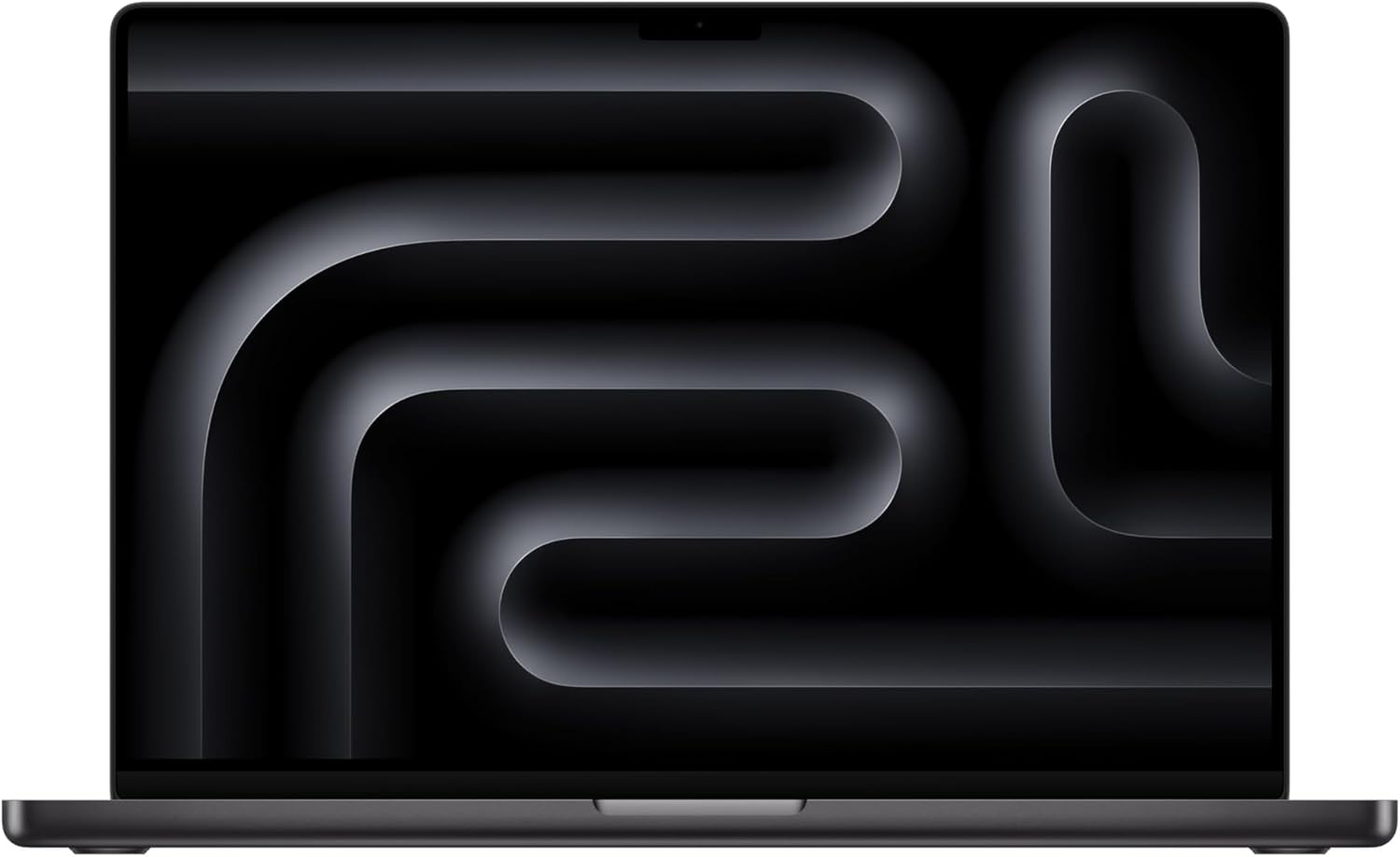 MacBook Pro 16 M5 Pro, 24GB, 1TB
$2,649.00
MacBook Pro 16 M5 Pro, 24GB, 1TB
$2,649.00
 MacBook Air 15 M3, 24GB, 512GB
$1,599.00
MacBook Air 15 M3, 24GB, 512GB
$1,599.00
 MacBook Air M1 Renewed, 8GB, 128GB
$369.99
MacBook Air M1 Renewed, 8GB, 128GB
$369.99
 MacBook Pro 14 M1 Pro Renewed
$715.00
MacBook Pro 14 M1 Pro Renewed
$715.00
 MacBook Air 13 M3, 8GB, 256GB
$1,099.00
MacBook Air 13 M3, 8GB, 256GB
$1,099.00
 MacBook Air 15 M2, 16GB, 256GB
$1,499.00
MacBook Air 15 M2, 16GB, 256GB
$1,499.00
 MacBook Pro 14 M4, 16GB, 512GB
$1,471.08
MacBook Pro 14 M4, 16GB, 512GB
$1,471.08
 Sponsored Ad – Amazon.com