SSCE/WASSCE/GCE PAST QUESTIONS AND
ANSWERS
OBJECTIVES
1. During
mammalian embryo development, large amounts of oestrogen and progesterone are
produced in the
A. umbilical cord
B. amnion
C. placenta
D. amniotic fluid
2.
The function of the
epididymis in mammals is the
A. expulsion of
urine
B. storage of sperms
C. circulation of
blood
D. activation of sperms
3.
The outermost embryonic
membrane in the mammal is the
A. amnion
B. chorion
C. allantois
D. yolk sac
4.
Fertilization in humans
usually takes place in the
A. lower part of the
uterus
B. upper part of the
uterus
C. lower part of the
oviduct
D. upper part of the
oviduct
5. If a nursing mother is not producing enough milk, her hormonal
system is probably deficient in
A. proclactin
B. testosterone
C. thyroxin
D. insulin
6. Which of the following is likely to have a higher concentration of
the mitochondria?
A. Sperm cell
B. white blood cell
C. Egg cell
D. Red blood cell
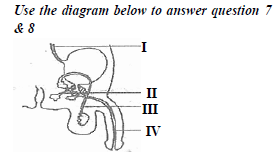
7.
From the diagram above the
structure labelled I originates from the
A. liver
B. kidney
C. small intestine
D. stomach
8.
From the diagram above
Birth control by vasectomy is achieved by severing the structure labelled
A. I
B. II
C. III
D. IV
9.
During ovulation, an egg is
released from the
A. corpus luteum
B. ovarian funnel
C. graafian follicle
D. fallopian tube
10. The reproductive system of
a male mammal made up of
A. claspers,
prostrate, gland, sperm duct and vas deferens
B. testis, prostate
gland, sperm duct and vas deferens
C. oviduct, urethra,
testis and sperm duct
D. testis, uterus, prostate
gland and sperm
duct
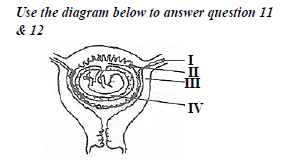
11.
The part labelled IV is for
A. excretion
B. nourishment
C. protection
D. respiration
12.
The organ through which the
embryo receives food, water and oxygen is labelled
A. III
B. IV
C. II
D. I
13.
Which of the following is
not part of the female reproductive system?
A. Ovary
B. Seminal vesicles
C. Uterus
D. Vagina
14.
Which of the following
substance from the mother’s blood diffuse through the placenta into the blood
vessels of the feotus?A. Carbon dioxide
and oxygen
B. Glycogen and starch
C. Urea and carbon
dioxide
D. Glucose and
oxygen
15. The structure of the embryo
which develops and makes contact with the uterine wall is known as the
A. umbilical cord
B. placenta
C. allantois
D. amnion
16.
Which of the following is
the least safe method of birth control? Using
A. spermicide creams
B. contraceptive
pills
C. barriers such as
condoms
D. the withdrawal method
17.
Spermatogenesis and
Oogenesis are both terms used to describe
A. mitosis
B. meiosis
C. gametogenesis
D. implantation
18.
Which of the following
events is likely to occur during pregnancy?
A. decrease in
production of oestrogen
B. secretion of
breast milk
C. ovulation
D. enlargement of breast
19.
Blockage of the oviduct is
likely to prevent
A.
fertilization
B.
copulation
C. ovulation
D.
secretion of sex hormones
20. The birth control method applicable to only male is
A. the pill
B. the diaphragm
C. vasectomy
D. foaming tablets
Answers
|
1. C |
6. A |
11. C |
16. D |
|
2. B |
7. B |
12. C |
17. C |
|
3. A |
8. C |
13. B |
18. A |
|
4. C |
9. C |
14. D |
19. A |
|
5. A |
10. B |
15. A |
20. C |
THEORY
1. (SSCE
1995) (a) Outline the main stages in the
process of the birth of a human baby.
Solution
(a) Main stages in the
process of birth
In the process of birth, the posterior pituitary glands secrete hormones
called oxytocin, which causes the thick wall of the uterus to undergo regular
powerful contraction called labour. The abdominal wall also contracts and
eventually the embryonic membranes are broken. The vagina as well as the cervix
dilate. With the head of the foetus lying towards cervix, the baby gradually
emerges through the vagina.
2. (SSCE
1997) Describe the development of the
mammalian embryo from fertilization to the end of gestation
Solution
The zygote undergoes cell division to form a ball of cells, which moves
down the fallopian tube and have itself attached to the wall of the uterus. The
outer most layer of this ball of cell is called the trophoblast, which
contribute to the formation of placenta. The placenta is the organ, which the
zygote uses to implant itself in the mother womb. Amnion and chorion are formed
and amniotic fluid protects the embryo. The embryo obtains oxygen and nutrients
from the mother and eliminate waste products through the placenta via the
umbilical cord. The body features form by differentiation and birth occurs at
the end of gestation.
3. (WASSCE
2014) state three secondary sexual
characteristics in girls
Solution
Refer to blog content
Click Here for WAEC/ SSCE/ WASSCE/ NOVDEC Biology Past Questions and Answers